Issue #45 – Available Online
Contents Include: Classics Bronx Club, Product Reviews, The Comedown, Grave Consequences, Product Spotlight, Product Reviews, and I Love..



After more than seven years, Urban Velo printed its 45th and final regularly scheduled issue. Since 2007, the publication has documented..

Contents Include: Classics Bronx Club, Product Reviews, The Comedown, Grave Consequences, Product Spotlight, Product Reviews, and I Love..

By Rachel Krause, photos by Grant Hindsley. A Salt Lake City man’s piano bike blurs the line between bikes and music. “You don’t see..
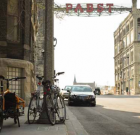
City: Milwaukee, WI Nickname: Brew City, Cream City, or City of Festivals. Claim to Fame: Beer and Brats, Pabst, Miller High Life, Harley..

Contents include: Fixed Gear Freestyle—It Ain’t Over Yet, New Courier Renaissance, News and Views, Future Bike, The Cincinnati..

Contents include: I Love Riding in the City, NAHBPC 2014, Amtrak Roll-On Service, Wolfpack Hustle Civic Center Crit, Product Spotlight:..
Contents Include: Utilitarian Bicycles in China, City Report: Washington DC, Gallery: SF Courier Portraits, Redhook Crit Women’s Race,..
Determining chain length on a single speed drivetrain is straightforward enough, but proper chain length on a multi-speed derailleur system..
Lane Kagay is the owner and fabricator behind CETMA, and builds racks and cargo bikes in Venice, California. He recently took in his first..
It’s been a long cold winter, but we’re back with a spring issue! Contents Include: I Love Riding in the City, News and Views,..