

Urban Velo published 45 issues between 2007 and 2014.
Download or view Urban Velo on your computer. 100% free, no catch, no email login. The PDF version is ideal for printing and allows you to zoom in and out.
 |
Urban Velo – Issue #45 December 2014 Classics Bronx Club, Product Reviews, The Comedown, Grave Consequences, Product Spotlight, Product Reviews, and I Love Riding in the City. |
 |
|
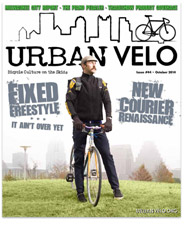 |
Urban Velo – Issue #44 October 2014 Fixed Gear Freestyle: It Ain’t Over Yet, New Courier Renaissance, News and Views: Future Bike, The Cincinnati Bikeway, Product Spotlight: Interbike and Eurobike Coverage, Product Reviews: Brompton, Kryptonite, Chrome and more, City Report: Milwaukee, ISO Tire Sizes, Biking With Isa, The Piano Pedaler, and I Love Riding in the City |
|
|
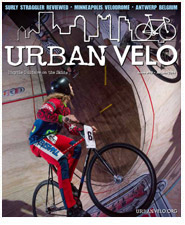 |
Urban Velo – Issue #43 August 2014 I Love Riding in the City, NAHBPC 2014, Amtrak Roll-On Service, Wolfpack Hustle Civic Center Crit, Product Spotlight, Superb, Specialized, Gevenalle, and Brooks, City Report, Antwerp, MPLS Velodrome, Gallery, Kevin Sparrow, Product Reviews, Surly, New Albion, Ilumenox, and ABUS, Fun Rides, On the Move, Narrow-Wide Rings Explained and Knog Night Ride. |
|
|
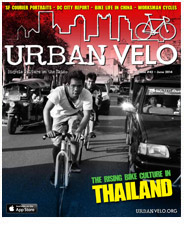 |
Urban Velo – Issue #42 June 2014 Utilitarian Bicycles in China, City Report: Washington DC, Gallery: SF Courier Portraits, Redhook Crit Women’s Race, World Naked Bike Ride. Product Spotlight: Marin, SRAM, Detroit Cargo, Abbey Bike Tools, Product Reviews: Fuji, Knog, Hiplok, Vaya and more, Chiang Mai, Thailand, Worksman Cycles, Know Your Derailleur Limits, No Exit, and The Almanzo 100. |
|
|
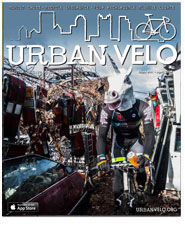 |
Urban Velo – Issue #41 April 2014 I Love Riding in the City, News and Views, Marathon Crash report, Shopbike Shootout, Product Spotlight, City Report: Pittsburgh, Bandit Cross, NAHBS 2014, Product Reviews, Bicycling Art in a Melting Pot, Bicycle Insurance, Cetma, Multi-Speed Chain Length, Bilenky Junkyard Cross. |
|
|
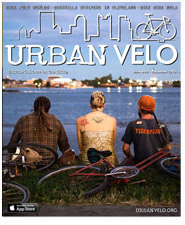 |
Urban Velo – Issue #40 December 2013 2013 World Hardcourt Bike Polo Championship, Bike Bike 2013, HD Witness, Something About Cleveland, Pedal Threading, Via Bicycle, Product Reviews and I Love Riding in the City. |
|
|
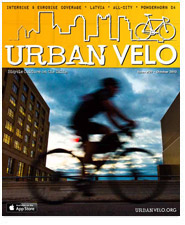 |
Urban Velo – Issue #39 October 2013 Interbike and Eurobike Product Spotlight, Powderhorn 24, Urban Cycling Hall of Fame, I Love Riding in the City, Latvia’s Cycling Renaissance, Hub Spacing, The CPSC And Me, Vincent Rodriguez, All-City, Dahon, Fyxation, Light & Motion, Avid, NiteRider and more. |
|
|
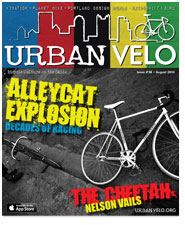 |
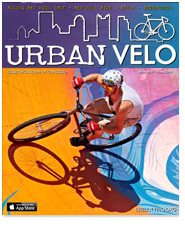
Urban Velo – Issue #38 August 2013 I Love Riding in the City, Product Spotlight, Alleycat Explosion, Gallery: The Bike Messengers, Product Reviews, The Cheetah: Nelson Vails, Denver’s ReCyclery Café, Cycling Legalese, Rim Brake Maintenance, Fixed Without Dix. |
|
|
 |
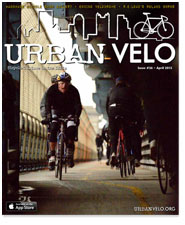
Urban Velo – Issue #37 June 2013 I Love Riding in the City, Racing Red Hook Crit, Stoopidtall, Penrose Velodrome, A Bike Shop for the Whole World, Gallery: Red Bull Ride + Style, Product Reviews: Raleigh, Swobo, Timbuk2, Hold Fast, Knog and more, Anti-Seize Compound, Gear Inches, Battle for the Midwest. |
|
|
 |
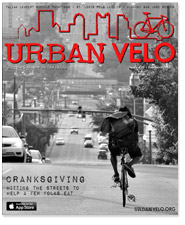
Urban Velo – Issue #36 April 2013 I Love Riding in the City, Product Spotlight Abus, Track of Ages, Roland Burns, NAHBS 2013 Gallery, Alexander Montsenigos and the Unwinnable Argument, Building Bike-Friendly Cities of the Future, Product Reviews, Ramps and Pins, and Monster Track 14. |
|
|
 |
Urban Velo – Issue #35 February 2013 I Love Riding in the City, Product Spotlight, From Cranks to Food Banks, Taliah Lempert Bicycle Paintings, Product Reviews, Stare Death in The Snout, The Long Haul, BB Height Vs. Drop, DIY Shoe Dryer, St. Louis bike polo Lock-In. |
|
|
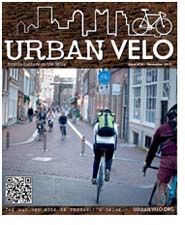 |
Urban Velo – Issue #34 November 2012 The Way You Ride is Probably A Crime, Danish Modern, Copenhagen Cycle Chic’s Mikael Colville-Anderson, Lurking in Europe, Jason Clary, Product Reviews, Interbike and Eurobike Coverage, Riding with Conscious, Flat Prevention, and I Love Riding in the City. |
|
|
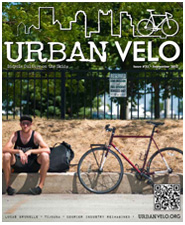 |
Urban Velo – Issue #33 September 2012 Lucas Brunelle, Bang King, Tijuana, Courier Industry Reimagined, DIY Light Mount, Disc Brakes, CMWC photo gallery, I Love Riding in the City and more. |
|
|
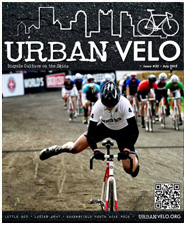 |
Urban Velo – Issue #32 July 2012 Doing it for the Kids—Bakersfield Bike Polo, Back Home Again In Indiana—The story of the Little 500, 3 Brooklyn Bike Builders, Product Reviews and News—State Bicycle Co, Torker, Abus, Knog, Kenda, DZR and more, The Toughest Ladies in Sport—The Ladies Army Tournament, A Conversation with Grant Petersen, Derailleur Alignment, The IG Markets Nocturne London, I Love Riding in the City and more. |
|
|
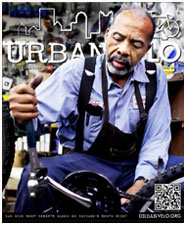 |
Urban Velo – Issue #31 May 2012 Wolfpack Hustle Marathon Crash Race, Can Bike Shop Deserts Bloom on Chicago’s South Side?, Gallery: NAHBS 2012, Jogja Bikes Once More, Helmet Tech, Product Reviews and News, and I Love Riding in the City. |
|
|
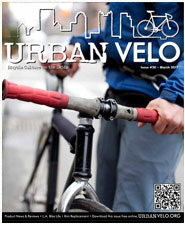 |
Urban Velo – Issue #30 March 2012 Glitter and Grime LA Bike Life, Greg Ugalde NYC Artist and Bike Messenger, Shanghai Photo Gallery, Post Apocalpyse Twin Cities, Pelizzoli A Living Legend, Bike Graveyards, Rim Replacement, Product Reviews and News, and I Love Riding in the City. |
|
|
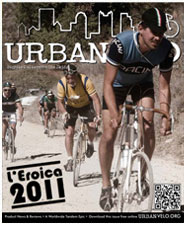 |
Urban Velo – Issue #29 January 2012 L’Eroica 2011, One Tandem, Eighty Countries, Photo Gallery: Puerto Rico, A Bicycle Framebuilding Crash Course, Residue, Product Reviews & News, Stay Loose and I Love Riding in the City. |
|
|
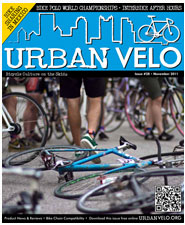 |
Urban Velo – Issue #28 November 2011 Bike Sharing in El Monstruo, If You Build It They Will Play, Ride Fast Roll Easy, I Love Riding in the City, Bike Jerks, Product News and Reviews, Interbike Coverage, Interbike’s Urban After Hours, Jakarta’s Record Fixed Gear Ride, Chain Width and Compatibility, Residue and No Exit. |
|
|
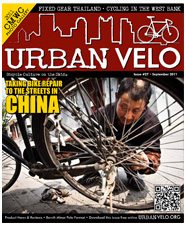 |
Urban Velo – Issue #27 September 2011 Chiang Mai, Thailand, In Beijing, Bike Repairs Start from Squat, Biking in the West Bank, For the Love of the Game, CMWC 2011 Warsaw, Product Reviews & News, Fixed Gear Drivetrain Cleaning, Stem Faceplate Installation, Residue and No Exit. |
|
|
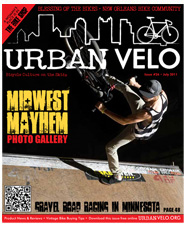 |
Urban Velo – Issue #26 May 2011 Blessing of the Bikes, A Woman’s Place is in the Bike Shop, Almanzo 100, I Love Riding in the City, Midwest Mayhem Gallery, Residue, Out in the Street, Product Reviews & News, Vintage: Love It or Leave It, DIY Nipple Driver and No Exit.. |
|
|
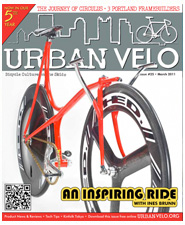 |
Urban Velo – Issue #25 May 2011 The Journey of Circulus, Kinfolk Lounge Tokyo, An Inspiring Ride with Ines Brunn, Three Portland Framebuilders, Product Reviews and News, Riding with the Dragon, Annual Advocacy Awards, Suicide Fixed Cog, Residue and No Exit. |
|
|
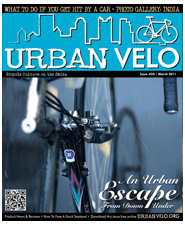 |
Urban Velo – Issue #24 March 2011 Escaping Is What I Do Best, Dangerous Business, Catfish And Mandala, India Gallery, Product News and Reviews, On Not Riding, The Wander Map, Stuck Seatpost, Drivetrain Wear, I Love Riding in the City, Residue and No Exit |
|
|
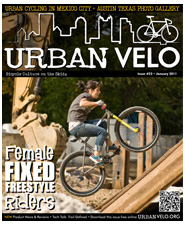 |
Urban Velo – Issue #23 January 2011 Female Riders in Fixed Freestyle, Zen and the Art f Urban Cycling, Urban Ruckus, I Love Riding in the City, Austin TX Gallery, Residue, Product Reviews, Product News, Ha Ha Ha Ha Wipeout, Trail Steering Geometry and No Exit |
|
|
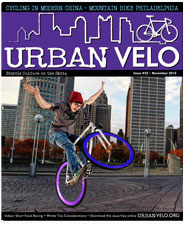 |
Urban Velo – Issue #22 November 2010 Holeshot-The Bastard Child of Cycle Speedway, Mountain Bike Philadelphia, Return of the Scorcher, E-Z Money, Beantown Builders, Gallery: Still Passing By, Residue, Winter Tire Considerations, Antique Tech: Crankset, Why Cable Locks Suck and No Exit. |
|
|
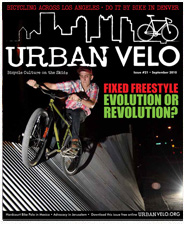 |
Urban Velo – Issue #21 September 2010 Do It By Bike In Denver, Fixed Freestyle Evolution, Countywide, I Love Riding in the City, From Cradle to Pave: Planning Your |
|
|
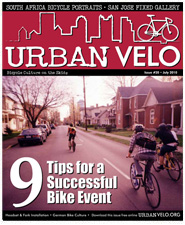 |
Urban Velo – Issue #20 July 2010 Bicycle Portraits, Das Rad Ist Gut, The Sky is Falling, I Love Riding in the City, San Jose Fixed, Residue, Invasion of the Bike Lane Snatchers, 9 Tips for Running a Successful Bike Event, Bicycle High Fives, Headset and Fork Installation, Home Shop Strategy and No Exit. |
|
|
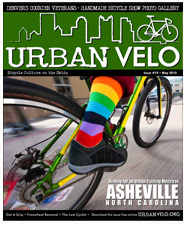 |
Urban Velo – Issue #19 May 2010 Denver’s Courier Veterans, Aiming for an Urban Cycling Mecca in Asheville, NC, Finders Keepers, I Love Riding in the City, Gallery: 2010 NAHBS, Residue, The End of Favoring Motorized Transportation, Red Hook Crit, The Lost Cyclist, Freewheel Removal, Get a Grip and Bicycle Helmet Evolution. |
|
|
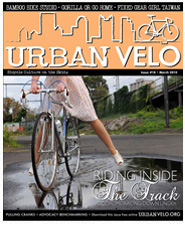 |
Urban Velo – Issue #18 March 2010 Riding Inside-The Track, GOrilla Or Go Home, Green-er Machines, I Love Riding in the City, Fixed Gear Girl Taiwan, Residue, The State of the Union for Bicycling and Walking, Bikes on Film, Crank Arm Removal, Layering for Springtime, DIY Chainring Bolt Tool and No Exit. |
|
|
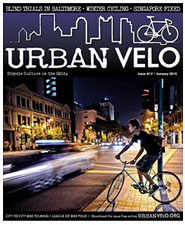 |
Urban Velo – Issue #17 January 2010 Contents include: Riding Blind, Pulling Out the Stops, Unfamiliar Things, Two Bikes and a Funeral, Hardcourt Bike Polo Gets Organized, Gallery: Singapore Fixed, Bikes on Film: Police Beat, Splined Bottom Brackets, Winter Cycling Basics, The Internals of Internal Gears, I Love Riding in the City, Residue and No Exit: More Bicycle Games. |
|
|
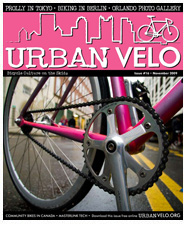 |
Urban Velo – Issue #16 November 2009 Contents include: Adventures in Tokyo, Persuasion: A Political Primer, Bike Works, Love Letters Written in Horseshit, I Love Riding in the City, Pedals Plus People, Residue, Urban Legend – Mike Shih, Victory of the Bicycle, Masterlink Tech, Diagnose A Stuck Stem, Line Up Your Hot Patch, No Exit. |
|
|
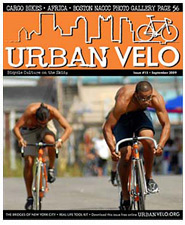 |
Urban Velo – Issue #15 September 2009 Contents include: NACCC Photo Gallery, The Bridges of NYC, Community Cargo, On the Road to Azougui, Working Bikes, Does Share the Road Work?, Real Life Tool Kit, Repairing a Sidewall Tear, Bottom Bracket Tapers, I Love Riding in the City, Residue, Bikes on Film and No Exit. |
|
|
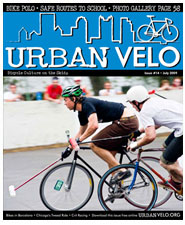 |
Urban Velo – Issue #14 July 2009 Contents include: The Fed – Hardcourt Bike Polo Considers Its Future, Crit Racing, Barcelona Tiene Pode, Windy City Wool, Safe Routes Revolution, KC Urban Cyclist Project, Stem Clamp Penny Trick, What’s in There? – Inside Conventional Freewheels, Looking Where You’ve Been, Love Riding in the City, Residue and No Exit. |
|
|
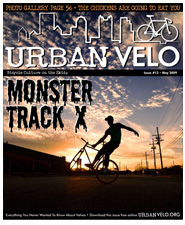 |
Urban Velo – Issue #13 May 2009 Contents include: Monster Track X, Ku, What’s the Muss About Mass? Best Before 1994, The Running of the Chickens, Urban Assault, Everything You Never Wanted To Know About Valves, Brake VS Shifter Housing, Talking About Chainline, I Love Riding in the City, Bikes on Film, Residue and No Exit. |
|
|
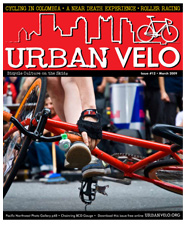 |
Urban Velo – Issue #12 March 2009 Contents include: Pain in the Neck, Roller Racing, Bicycle Advocacy Stimulus Package, Discovering the Bicycle in Bogotá, Pacific Northwest Gallery, Residue, Bikes on Film, Getting a Handle on Handlebars, Chainring BCD Gauge and No Exit. |
|
|
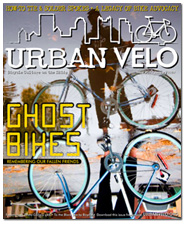 |
Urban Velo – Issue #11 January 2009 Contents include: Ghost Bikes – Remembering our Fallen Friends, Fixed Freestyle Evolution, Fyxomatosis Gallery, How to Tie & Solder Spokes, The Rotafix Method, Residue, Black Sea by Bicycle, A Legacy of Bicycle Advocacy, I Love Riding in the City and No Exit. |
|
|
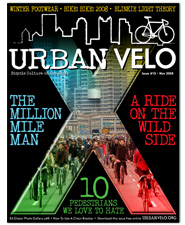 |
Urban Velo – Issue #10 November 2008 Contents include: The Million Mile Man – Danny Chew, A Ride on the Wild Side – A Working Vacation as a Bike Messenger, 10 Types of Pedestrians We Love to Hate, Winter Footwear Options, Bike! Bike! 2008, Blinkie Light Theory, How to use a Chain Tool, Ed Glazar Photo Gallery, plus I Love Riding in the City, Bikes on Film, Residue and No Exit comics. |
|
|
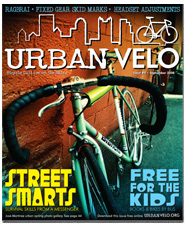 |
Urban Velo – Issue #9 September 2008 Contents include: Street Smarts—survival skills from a bicycle messenger, Books on Wheels—The MobikeMobookMobile, I Love Riding in the City, Vote Dick, The Greatest Bicycle Movie Ever Made, José Martinez Photo Gallery, The Most Beautiful Bike I Have Ever Seen, Out of the Woods & Back Into Town, Headset Adjustments, Fixed Gear Skid Marks, Residue and No Exit. |
|
|
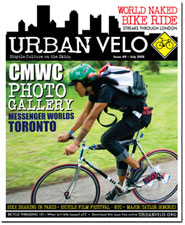 |
Urban Velo – Issue #8 July 2008 Contents include: Cycle Messenger World Championships, World Naked Bike Ride, Bicycle Film Festival – NYC, A Special Place In Hell For Bike Thieves, Sustainable Fuel, Residue, Fastest Man On A Bicycle Honored At Last, Share… And Share Alike – Examining Vélib, One Car – Family Living with Less Cars, More Bikes, Bike Threading Explained, A Simple Way to Measure Chain Stretch, I Love Riding in the City and No Exit |
|
|
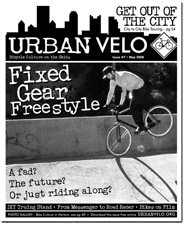 |
Urban Velo – Issue #7 May 2008 Contents include: I Love Riding in the City, Fixed Freestyle, Residue, Riding is My Religion, Get Out of the City, Bicyclists–The Future is Now, Bikes on Film, Maximum Insertion, DIY Truing Stand and No Exit. |
|
|
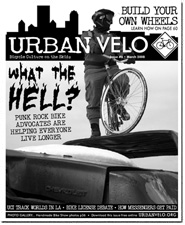 |
Urban Velo – Issue #6 March 2008 Contents include: What the Hell? LA World Cup Classic Track Racing Report, Independent Contractor Status in the Delivery Service Industry, NAHBS Photo Gallery, Residue Comics, License to Ride, I Love Riding in the City, No Exit and Wheelbuilding 101—a comprehensive guide to building and maintaining your own wheels. |
|
|
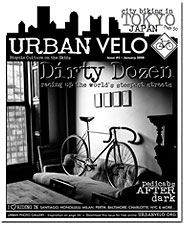 |
Urban Velo – Issue #5 January 2008 Contents include: The Dirty Dozen, Pedicabs After Dark, American Bike Punks in Tokyo, Techno Crashing, Faber’s Cyclery is Closed, Melburn-Roobaix, Residue & No Exit comics, how to adjust your rear derailleur and install that all-important front brake, plus reader-submitted photography from China, England and New York City and more. |
|
|
 |
Urban Velo – Issue #4 November 2007 Contents include: Goldsprints, Winter Survival Guide, I Love Riding in the City, The Rise & Fall of a Bike Shop That Never Was, Ghana, Residue, Bike Fit, Ignorance is Bliss, Starting a Local Advocacy Organization Part III and No Exit. |
|
|
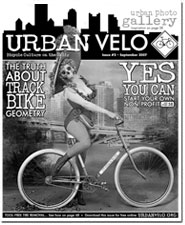 |
Urban Velo – Issue #3 September 2007 Contents include: Track Bike Geometry, 24 Hours of Bike!Bike!, Click, Click, Clique, Into the Arena, The Organic Urban Cyclist, Don’t Kiss an Elephant on the Lips Today, Starting a Local Advocacy Organization Part II, Love Affairs, How to Tension a Singlespeed Chain, Why Bells are Cool and Tool-free Tire Removal. |
|
|
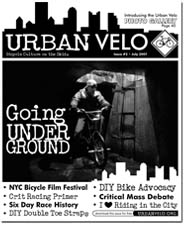 |
Urban Velo – Issue #2 July 2007 Contents include: Going Underground, NYC Bicycle Fim Festival, Six Day Race History, Critical Mass Debate, Double Strap Toeclips, How To Wrap Bar Tape, Bikes, Bands & Burritos. |
|
|
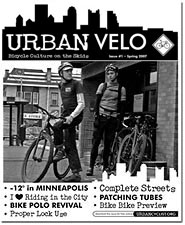 |
Urban Velo – Issue #1 Contents include: Stupor Bowl X, Bike Polo Revival, Proper Lock Use, Complete Streets, Patching Tubes, Bike Bike Preview, Her Story and more! |
|
|